
USFans Payment Methods: Reconcile the Amount, Purpose and Result
Before making a USFans payment, identify what it is intended to cover. Paying for products, paying for an international parcel and receiving money back are different financial events. An amount that looks familiar is not enough to connect the correct transaction to the correct purpose.
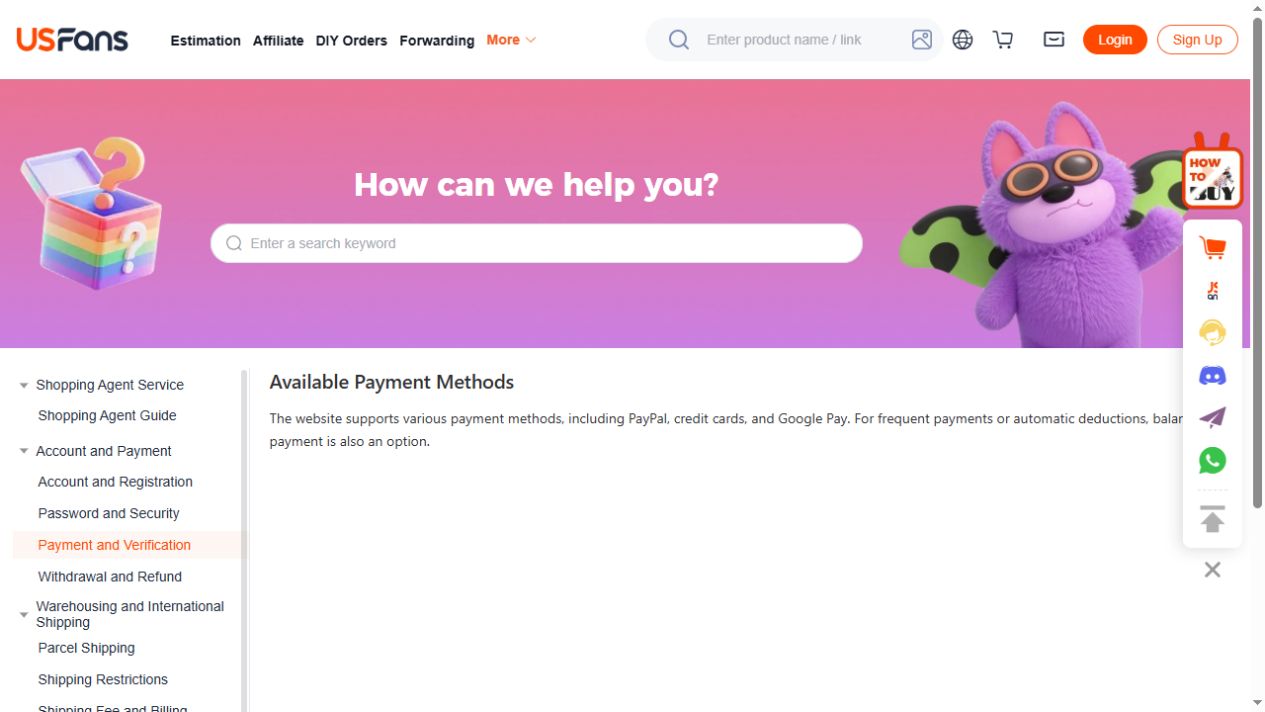
USFans' payment-method help, checked on 30 September 2026, lists PayPal, credit cards, Google Pay and account balance. Start with that list, then check which options your actual transaction offers: the help page does not establish eligibility for every account, country or payment purpose.
Make a payment-purpose note before authorising
Keep the intended purchase or parcel, the amount, currency and displayed recipient context together. Read the final selection rather than relying on an earlier basket screenshot. A changed quantity or option can make the amount differ for a legitimate reason, but you need to identify the change.
The USFans spreadsheet guide separates the product and parcel stages. A saved product price should not be treated as a complete delivered total, and an international shipping payment should be matched to the parcel it covers.
If you are only browsing, inspect the TNF T-shirt candidate on USFans and identify the option you want to compare. That product reference is not a payment instruction: opening it does not open a USFans checkout, debit an account or settle an existing order.
Check available methods rather than importing a list
PayPal appears in the platform's published list checked on 30 September 2026; Klarna did not appear in that list. That difference answers what the help page names, not whether an unlisted option is unavailable in every circumstance. For a particular order, use the choices and conditions shown at checkout rather than a provider logo in an old post.
Read the options offered for the actual transaction and their stated conditions. Do not select an unfamiliar third-party arrangement solely because a message claims that the usual option is unavailable. Verify unexpected changes through a known service route.
The account safety guide covers those destination checks. If you need clarification about a displayed method or amount, ask about the specific transaction through a private support channel without exposing credentials.
Keep two records beside each other
Use the financial record to understand the payment state and the order or parcel record to understand the service state. One does not automatically establish the other.
| Financial question | Related service question |
|---|---|
| What amount and currency are recorded? | Which item purchase or parcel does it concern? |
| What state does the provider report? | What state does the order or parcel show? |
| What time is attached to the transaction? | Is the service update earlier or later? |
| Is this a new transaction or a later event on an existing one? | Does it correspond to a new action or the same request? |
If the records disagree, preserve the difference. Do not change your description to make them look consistent before asking for clarification.
What “pending” can mean in a provider's own context
PayPal's explanation of an order authorisation distinguishes a pending authorisation from a captured payment. In that described flow, the seller can have received the order without yet collecting the payment. Read the status of your actual transaction rather than treating every visible entry as a completed debit.
This distinction applies to the PayPal flow described, not every provider's use of “pending.” A payment method appearing in USFans' help does not tell you the state of a particular payment. Read both the method offered at checkout and the provider's transaction record; do not transfer a timing rule to a different provider.
For an unclear or failed attempt, use the payment-failed guide. Avoid submitting another payment until you understand the existing result well enough to choose the next action.
A reconciliation example: similar amounts, different purposes
Imagine a hypothetical account with a product payment and a later parcel payment that happen to have the same amount. Sorting a bank record by amount alone could make them look duplicated. You need the timestamps, purpose and transaction references to distinguish them.
Now imagine two entries with different amounts related to the same purchase. That difference does not automatically mean two unrelated orders. Check what each entry describes rather than inventing a cause from the numbers.
These examples are not reports of actual charges. Their point is that amount matching is one check, not a complete reconciliation method. Keep the actual identifiers private when discussing a real case with the relevant service.
Review the final amount after a promotion
An accepted coupon response and an authorised payment are different events. Before proceeding, check which line changed and whether the final payable amount matches your intended basket or parcel.
Use the coupon guide to evaluate a reduction without adding unwanted products simply to reach a threshold. If you change the basket after reviewing an offer, examine the final amount again rather than relying on the earlier result.
Track money coming back separately
A cancellation request, an approved refund and receipt of funds are different stages. Ask which event has occurred and where the money is meant to appear. Do not mark the process complete solely because a message says a request has been received.
Identify the stated destination of the refund before looking for it. A credit in the USFans account is different from money reaching a bank or card account; a separate withdrawal record may be needed to follow that later step. The returns guide explains the platform's return statuses and how to keep the item request and financial result separate.
Keep a concise private record
Retain the amount, currency, purpose, time and relevant reference with the outcome. When seeking help, share the minimum needed through the appropriate private channel. Public screenshots should not expose account details, full payment credentials or recovery information.
If a page freezes immediately after submission, preserve what you can observe and check the existing records. Separate a display failure from an action whose result is uncertain: check the transaction record before repeating a payment.
Stop adding uncertainty
Record the message and the time of the attempt. Then use a known account or provider route to check the existing result. Do not repeatedly press the payment control simply to test whether the confirmation page starts working.
Keep the intended order or parcel identifiable. If you switch account, device or payment method immediately, it can become harder to tell which attempt produced each entry. Resolve the current ambiguity before treating another method as a fresh start.
After a payment submission, check its recorded outcome before trying again; reloading a product description does not carry the same transaction risk.
Build a short attempt history if you already retried
If you made more than one attempt, list them separately in time order. Record each method, amount, result and any associated order reference. Leave uncertain links between records unresolved until the service or provider clarifies them.
Imagine a hypothetical first attempt that ends on a blank page and a second that shows a decline. The second message does not establish the result of the first attempt. You need to check both rather than summarising the whole session as “payment failed twice.”
Likewise, a later success does not explain every earlier pending entry. Keep the earlier records available until their states are understood. This example illustrates record handling, not an actual customer incident.
Frequently asked questions
Does USFans accept PayPal or Klarna for my order?
The USFans help list checked on 30 September 2026 includes PayPal, credit cards, Google Pay and account balance. It does not name Klarna. Check the available choices for your order rather than treating either the list or the absence of a name as a guarantee about your checkout.
Does a payment entry prove my parcel has shipped?
No. Confirm shipment through the matching parcel record. Financial and physical progress are different observations.
Are two equal amounts necessarily a duplicate charge?
No. Compare purpose, timestamps and references before drawing that conclusion. If a duplicate remains suspected, ask about the specific entries through the relevant private channels.
Should I retry when the confirmation page is blank?
First check the result already recorded. Repeating an uncertain transaction can make reconciliation harder.