
USFans Shipping: Compare the Parcel You Will Actually Send
USFans shipping decisions become clearer when you compare services for one defined parcel. Fix the destination, contents and packing assumptions before comparing prices. Otherwise a cheaper quote may simply describe a different shipment.
If you are still selecting products, start with the USFans spreadsheet guide. Product purchasing and international delivery are separate stages in USFans' published shopping-agent guidance. The amount attached to a product reference is not automatically the cost of receiving it at your address.
Start with the contents, not the cheapest headline
Write down what will go into the parcel and what is still undecided. An item waiting for a return decision should not quietly become part of your shipping comparison. Several products reaching the warehouse on different dates also create a choice about whether to wait or send separate parcels.
Neither consolidation nor splitting is automatically the cheaper answer. Compare the actual available services and totals for the alternatives, including any relevant packing or service charges. A second parcel can introduce another charge; a larger combined parcel can change the options offered.
For a clothing candidate, inspect the jacket reference on USFans. Confirm the actual option before adding it to your proposed contents. Its photograph does not establish packed weight, shipping eligibility or delivery cost; a quote for another jacket is not a measurement of this one.
Prepare the inputs that change the comparison
| Input | What to confirm | Why it matters |
|---|---|---|
| Destination | Country and the address details requested by the service | Availability and charges must apply to the recipient |
| Contents | The actual items being submitted | Service restrictions can depend on what is inside |
| Packed weight | Weight including the selected packaging | Product-only estimates can omit packing |
| Dimensions | The parcel's outer measurements in the required units | Some services use volumetric weight |
| Packing and extras | Which requested services are included | Two quotes may cover different work |
| Quote stage | Early estimate or amount for the prepared parcel | The information may have changed between stages |
For early planning, use the shipping calculator guide. When actual parcel information becomes available, replace assumptions with that information and compare again.
Why a light parcel can still have a higher billable weight
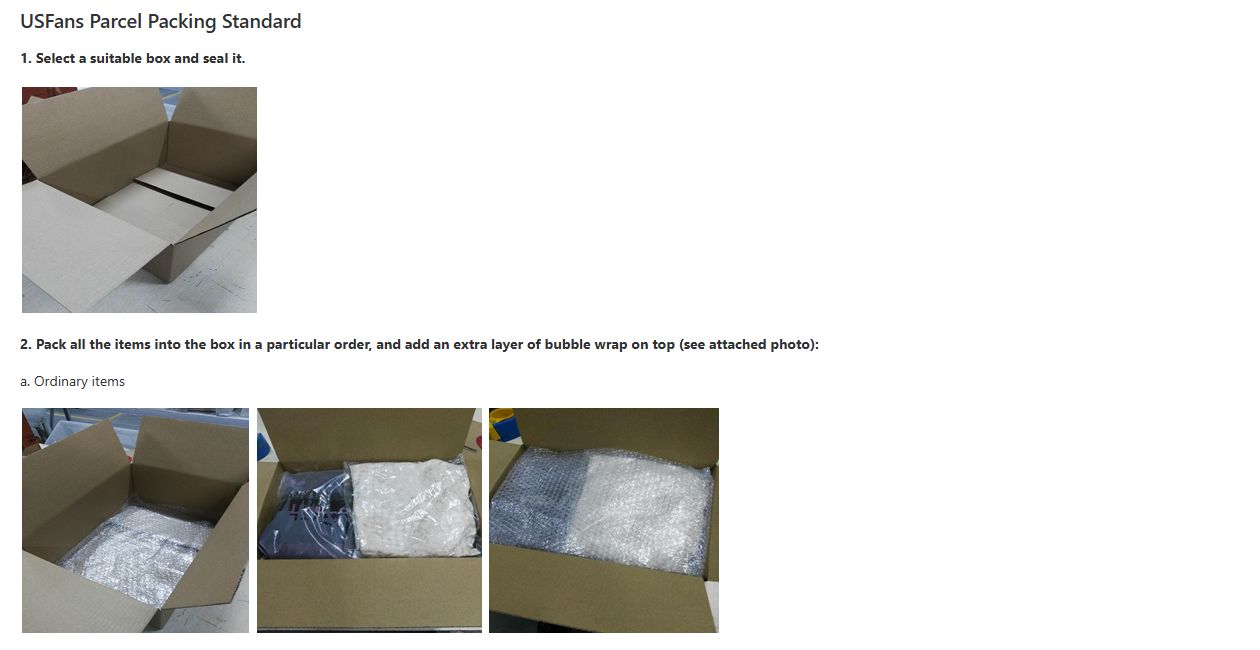
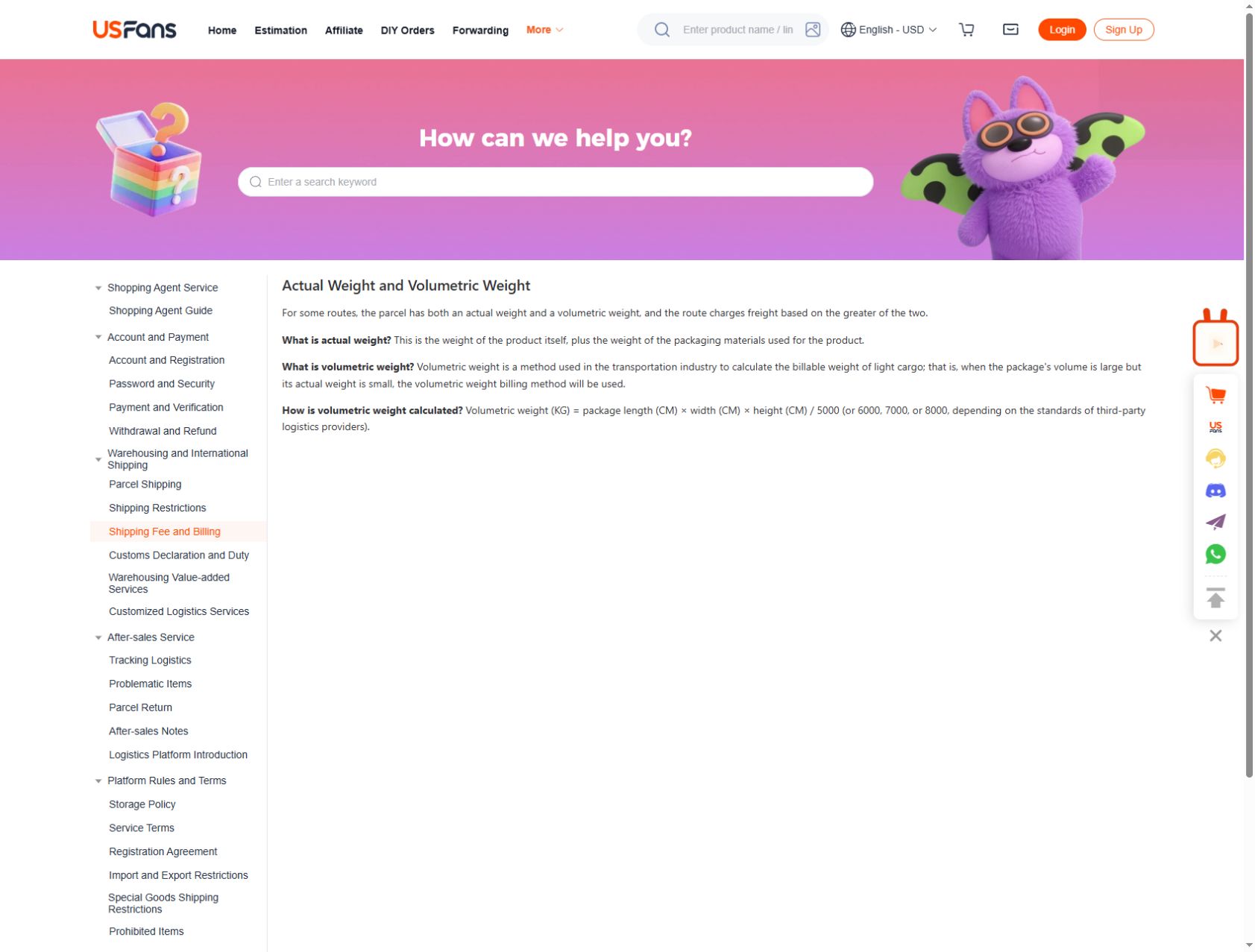
USFans' weight guidance checked on 30 September 2026 includes packaging in actual weight. For some routes, it says to compare that packed weight with volumetric weight and charge on the larger value. Its formula uses length, width and height in centimetres with a divisor determined by the logistics provider; the listed examples are 5000, 6000, 7000 and 8000. Use the divisor for your selected service, not whichever produces the lowest result.
Here is a hypothetical illustration, not a USFans quote. A box measuring 40 × 30 × 25 centimetres has a volume of 30,000 cubic centimetres. With a divisor of 6,000, the calculated volumetric weight is 5 kilograms. If that example service compares the result with an actual packed weight of 3 kilograms, volume produces the larger figure. Billing increments and other service rules would still need checking.
Do not attach that example's 5 kilograms to your own parcel unless its inputs and applicable rule match. Changing packaging can change the calculation, but reducing protection purely to lower volume can create a different problem.
Separate the cost stages
Keep merchandise and domestic delivery distinct from international shipping. Within the parcel decision, establish what the quoted amount covers and whether selected extras are separate. Do not call a number the final delivered total when you have not established its scope.
If a promotion applies, compare the same parcel before and after the offer and check the stated conditions. A discount label alone does not tell you whether an alternative service costs less overall. Currency and quote timing should also match when you compare amounts.
Retain the amount and service you actually selected, together with the quotation date. A screenshot from another shipment can illustrate how charges are displayed, but it cannot supply your current quote. Check whether the service terms address customs-related charges; do not assume those charges are included simply because a price is described as shipping. This is a question about the scope of your offer, not a statement that every destination has the same charges.
Make the waiting decision explicitly
Imagine a hypothetical warehouse basket with a jacket ready to ship and a top still awaiting receipt. You want the jacket for an upcoming trip. Waiting may allow a combined parcel, but it also delays when you can submit the jacket. Sending it first requires comparing a separate shipment rather than assuming a combined estimate still applies.
List both options using the information available: which items leave, when they can be submitted and what delivery choices are offered. If the top's arrival is uncertain, do not build a firm departure plan around it. The warehouse guide helps distinguish received items from those still pending.
Read delivery time from the correct starting point
Product purchasing, seller dispatch, warehouse handling and international movement are different intervals. A transport estimate does not necessarily include all the time since you first paid for a product.
When comparing services, check the event from which the displayed estimate runs. Keep an expected range separate from a guaranteed commitment, and check what the service actually states rather than supplying a guarantee yourself.
For a deadline, leave room for stages not covered by the estimate. The delivery-time guide explores those stages; the tracking guide helps interpret events after a parcel has been dispatched.
Country questions need country-specific answers
A service appearing for one address does not establish availability for another. If you are asking about USFans shipping to Argentina or Mexico, enter the actual destination through the service's supported workflow and review the options for the intended contents. Confirm availability for that address before using a service in your budget.
The same discipline applies to any destination: do not transfer another buyer's quote or timeline simply because the item weight looks similar. Destination, service, packing and date may differ. A translated review is still an account of its own shipment, not a quote for yours.
For reading in another language, continue with the Polish shipping guide, Spanish shipping guide or Latvian shipping guide. These explain the comparison process; their language does not establish a particular service's availability or a quoted price for that country.
Before paying for the parcel
Confirm that the selected contents, recipient details and packing requests are correct. Review the service name, charge scope and conditions together. Resolve any item-level issue that would change whether that item should leave the warehouse.
After payment or submission, use the parcel record to follow up. A product link identifies a candidate, while a parcel reference identifies the shipment you need to discuss. Keep private addresses and identifying shipment details out of public screenshots.
If the amount or status is unclear, ask a specific question through platform support rather than repeating a payment because a page is slow.
Common shipping questions
Can I estimate shipping before buying?
You can use an estimate for budget planning, provided you know which inputs are assumptions. Recheck when the actual packed information and available services are known.
Does a low item price mean low international shipping?
No. Item price does not describe the parcel's dimensions, weight, destination or eligible service. Keep product comparison and parcel comparison separate.
Should I remove every box to save money?
Consider what protection or presentation would be lost and whether the service permits the change. Compare the packing alternatives for the actual contents rather than applying a universal rule.
Is “urging seller to ship” international tracking?
Treat seller dispatch and international parcel tracking as different stages. Establish which record the message belongs to before assuming that your international parcel is moving.
Does a delivery-point event mean I have received the parcel?
Read the carrier's event details and any recipient action instructions. A status label alone is not your confirmation that the contents are in hand. Use the matching parcel record when asking for clarification.
Return to the USFans spreadsheet
Does USFans ship to Hong Kong?
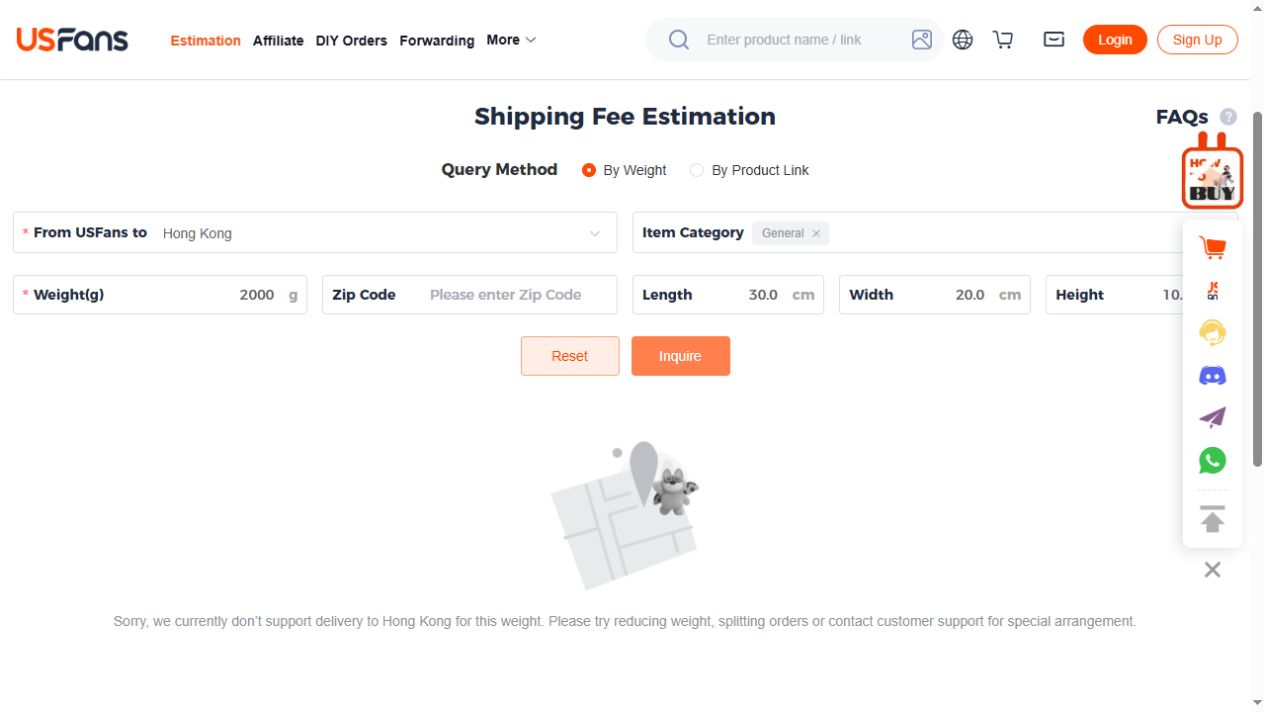
The public estimator returned no service for the following Hong Kong example on 1 October 2026.
| Input | Tested value |
|---|---|
| Contents | General clothing |
| Weight | 2,000 g |
| Size | 30 × 20 × 10 cm |
| Postal code | Not entered |
Changing the item selection may require a different service enquiry. The no-route response for this example does not establish a suitable line for your actual goods.
For destination-specific examples, see Mexico and Argentina in the Spanish shipping guide.