
USFans Spreadsheet Review: Separate the Find from the Buying Experience
A USFans spreadsheet review should answer more than whether someone liked a list. Did its links restore the right products? Were the options clear? What happened after the purchase, and which part of that experience can help you decide? Those questions require different information.
Start with the USFans spreadsheet for product discovery, or use the best spreadsheet comparison to assess a shortlist. When reading a review, first identify whether its conclusion concerns the list, the item or a completed buying stage.
Begin with the question you need answered
Before reading a verdict, decide what you want to know. You might be checking whether a product link still works, whether a garment has a particular shape, or whether a reported delay concerns international transport. A broad rating can combine all of these without answering any one clearly.
| Your question | Relevant detail in a review | An insufficient substitute |
|---|---|---|
| Can I recover this find? | The matching product and selectable option | A general claim that the list is excellent |
| Will this shape suit my use? | Garment measurements and how the wearer compared them | A size letter alone |
| What did warehouse inspection show? | Images tied to the received item and visible issue | A promotional product image |
| What delayed the parcel? | Dated stages and the delivery service involved | A total wait without a starting event |
| Was a problem resolved? | The request, response and eventual outcome | A promise that someone would investigate |
An account can be useful even when it answers only one of these questions. The problem is expanding a narrow observation into a conclusion it cannot support.
What the September public-comment sample tells us
The English-language Google Play listing viewed on 24 September 2026 displayed a June 25 review reporting a wait of more than a month for shoes. A February 2 review criticised cancellation and refund handling. These are users' reported experiences; the visible comments do not provide complete order timelines or independently verified outcomes.
They justify asking about timing and problem resolution. They do not establish an average delivery time, the share of orders affected or the result you will receive. The date of a review is also not necessarily the date of payment or dispatch.
That distinction matters in both directions. Do not dismiss a specific complaint because another person liked the service. Equally, do not turn one complaint into a measured failure rate. Compare accounts with enough context to identify the same part of the process.
Review the spreadsheet on its own terms
A useful collection helps you reach and understand a candidate. Test whether its label matches the destination, whether the intended option can be reconstructed and whether repeated entries add anything to your choice.
If several links lead to the same broad page, the collection may still be a browsing aid, but it has not restored several distinct products. If a link opens correctly while its description is outdated, navigation and content quality have different results. Record the difference instead of giving both the same verdict.
The spreadsheet links guide covers destination checks. It is especially useful when a positive review says only that “all links work”: working addresses alone do not confirm that their descriptions or available options are current.
Review the product without borrowing someone else's fit
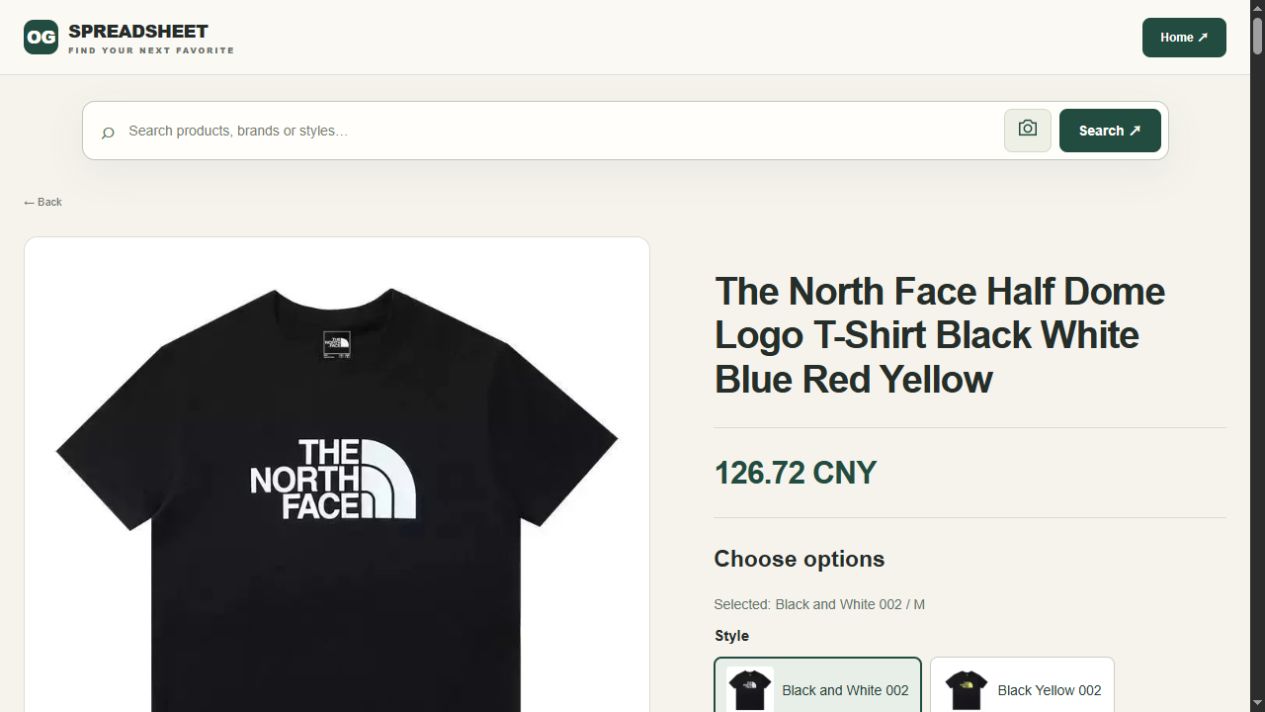
Consider a hypothetical review of a shirt described as comfortably oversized. That conclusion depends on the purchased option, the garment dimensions and the wearer's preferred fit. If you want a closer shape, the same observation can be useful without being a recommendation to choose the same size.
Ask which detail transfers to your decision. A measured garment length may be comparable with your own top when the method matches. A comment that the shirt “feels perfect” is personal experience, not a dimension. After-washing observations may matter, but should stay attached to the actual garment and care described.
Examine the T-shirt reference on USFans to compare its available measurements with the shape you want. The app comments above do not concern this T-shirt and cannot answer its fit or fabric questions.
Use the size guide to turn a relevant fit question into comparable measurements. For visible details, follow the QC photos guide.
Reconstruct a timeline before comparing delivery stories
“It took three weeks” needs a starting point. It could mean time since the first purchase payment, time since warehouse submission or time since a carrier accepted the parcel. Those are not interchangeable intervals.
Imagine two hypothetical accounts. One writer starts counting when the first item was purchased, then waits for another item before shipping. The other starts counting only after parcel dispatch. Their totals cannot fairly rank the delivery services until the stages are separated.
Look for the destination and service as well. A review from a different country may reveal a useful question to ask, but it does not provide your route's delivery expectation. Old experiences should not replace the conditions shown for a new parcel.
The tracking guide explains how to read parcel events. The shipping guide addresses the service comparison that should happen before dispatch.
Read complaints for the requested remedy and the outcome
A complaint may describe a mismatch, a delay, a cancellation request or a refund that has not arrived. Identify which one it is. The fact that a support conversation exists does not mean the issue has been resolved; an unhappy tone does not establish which action was requested either.
Useful follow-up information includes whether the request concerned one item or an entire basket, whether the item had already moved to another stage and whether a later update reported a concrete outcome. Do not invent an ending for a thread that stops after its first complaint.
If you have your own issue, keep the relevant order details privately and ask a specific question. For example: which item is affected, what differs from the selected option, and what response are you seeking? State the affected item and requested outcome without publishing account details.
Haul videos, social posts and repeated stories
A haul can show several received items and help you form product questions. It may say much less about charges, rejected items or service problems. Treat the visible selection as the scope of the presentation rather than assuming it represents everything ordered.
When the same photographs or story appear in several places, do not count each appearance as a separate purchase. Look for enough context to understand whether you are seeing another account or a repost. If a creator mentions a reward, invitation or other incentive, take that context into account without assuming it automatically makes every observation false.
Do not ask other users to expose addresses, full order numbers or private messages to make a comment useful. A redacted relevant detail can support a narrow point while keeping personal information out of public discussion.
A practical conclusion for your next purchase
When comparing a USFans review with other USFans reviews, keep a payment receipt separate from delivery evidence. A receipt may support that a payment was recorded, while a warehouse photograph addresses a received item at a different stage. Neither alone proves that the final parcel reached the buyer or that a requested refund arrived. Ask which completed event supports the conclusion rather than treating every attached image as proof of the entire purchase.
Use reviews to generate specific checks, not to outsource the whole decision. A timing complaint suggests examining the stages and your deadline. A garment observation suggests a measurement question. A spreadsheet criticism suggests testing the exact links you intend to use.
Then confirm what applies to the current item and transaction. The USFans spreadsheet guide follows those checks through purchasing and parcel planning. If the concern is account or payment protection rather than product choice, read spreadsheet safety.
Frequently asked questions
Is an app review the same as a spreadsheet review?
No. An app comment can concern the interface or a service experience, while a spreadsheet review concerns the usefulness of a collection. Establish the subject before applying its verdict elsewhere.
Does a positive haul prove every linked product is good?
No. Keep the observation attached to the shown items and versions. Unshown products and later stock are different questions.
Should I rely on an overall star score?
Use it as a starting signal, then read the details relevant to your decision. A combined score cannot tell you which option fits or which stage caused a delay.
Can these comments establish that USFans is safe for me?
They can highlight questions, but they do not audit your account, payment or selected product. Safety needs its own checks rather than a conclusion borrowed from delivery or fit feedback.
Return to the USFans spreadsheet
Lire les avis USFans en français.
Read in Spanish · Read in Polish · Read in Latvian · Back to top