
USFans Size Guide: Compare the Shape, Not Just the Size Letter
Start a USFans size comparison with a garment that already works for you. Its useful feature is not the letter on its label: it is the combination of dimensions, shape and room that suits the way you wear it. Compare the candidate using the same measurement definitions before choosing an option.
This guide covers practical comparisons, not a universal USFans size chart. Product charts can differ, so keep the chart attached to the exact listing and version. The spreadsheet links guide helps when a saved reference opens a different product or forgets the option.
Choose a reference garment for the intended use
A close-fitting top is a poor reference for the roomy layer you want over another shirt. Likewise, a jacket that works over a thin tee may not represent the space you need over a sweatshirt. Choose something you already use in the relevant way, then identify what you would keep or change about its fit.
Lay it out in a consistent position without pulling it into a new shape. Record only the dimensions you can define clearly. If a candidate's chart uses another method, clarify the method before treating its figures as comparable.
You can inspect the Essentials hoodie candidate on USFans for a hooded-layer comparison. Use a reference hoodie worn in the same way where possible. A crewneck can help compare clearly matched body measurements, but it cannot answer whether a hood will sit comfortably under your outer layer. Check the exact candidate's chart rather than assigning dimensions from the reference garment to it.
Read the chart's meaning before its numbers
Establish whether a chart describes body measurements or garment measurements. Then check the units and the endpoints for each dimension. The word “chest” alone may not tell you whether you are looking at a flat garment width, a garment circumference or a body measurement.
Do not compare these definitions as though they were identical. Doubling a clearly measured flat width can describe a corresponding circumference geometrically, but it does not turn that figure into a recommended body size or account for the garment's shape and intended ease.
| Dimension | Clarify before comparing |
|---|---|
| Chest or body width | Flat width, circumference or body measurement? At which level? |
| Garment length | Which upper point starts the measurement? Where does it end? |
| Shoulder | Between which points, and does the construction have a clear shoulder seam? |
| Sleeve | Does it begin at the shoulder seam or another reference point? |
| Waist | Measured relaxed, stretched or on the body? |
| Trouser length | Overall length or inseam? |
If a diagram accompanies the chart, use it to interpret the labels. A precise number without a clear method can create false confidence.
Compare more than one dimension
Imagine a hypothetical favourite sweatshirt with a flat body width of 56 centimetres and a length of 66 centimetres. A candidate option is listed as 58 centimetres wide and 72 centimetres long using the same methods. It offers more width, but the larger difference is in length. If you wanted a slightly roomier top without extra length, simply choosing that option may not solve your problem.
These numbers illustrate a comparison; they are not dimensions of the linked hoodie. Use the actual candidate chart and your own reference garment for a purchase decision.
Check which difference matters most to you. A sleeve or shoulder change may alter the result even when width looks acceptable. A size-up rule cannot capture all of those changes.
Keep the comparison specific to the product family
For T-shirts, consider the length and width together with the way you want the shoulder and sleeve to sit. For hoodies and sweaters, think about layering and how the hem behaves. For jackets, allow for the clothing you intend to wear underneath rather than relying only on a thin-top comparison.
For pants and shorts, distinguish the waist measurement method from rise and leg length. A suitable waist does not guarantee the intended leg shape. Elastic sections also need a clear relaxed or stretched measurement definition.
For sets, check the upper and lower pieces separately. A shared size label does not show that both pieces will suit you equally well. Confirm whether the selectable option applies to the full set and whether separate component choices are offered before assuming they are.
Treat footwear as its own comparison
Do not extend a clothing size conclusion to shoes. Use the chart associated with the specific footwear model and establish what each length represents. Foot length, an insole measurement and an external sole measurement are different things.
A familiar regional size label can be a starting point, but it is not enough to resolve an unclear chart. Compare the model's available information with a relevant pair and ask about the specific dimension you need. The shoes guide provides the product-category reading path.
This page does not supply a universal conversion between regional shoe sizes. A conversion that ignores the selected model and chart could suggest precision that has not been established.
Use warehouse measurements to answer the remaining question
If the chosen item has reached the warehouse and a measurement matters to your decision, ask whether that particular check is available. Describe the endpoints and unit you need. A request for “the size” may produce a label photograph rather than the garment measurement you meant.
When an image arrives, check that the item, ruler and both endpoints are visible. Note whether the fabric is folded or stretched. Do not read an exact result from a blurry image just because a ruler appears somewhere in it.
The QC photos guide explains how to request an informative view. A label check and a physical measurement answer different questions; neither alone proves how the item will feel when worn.
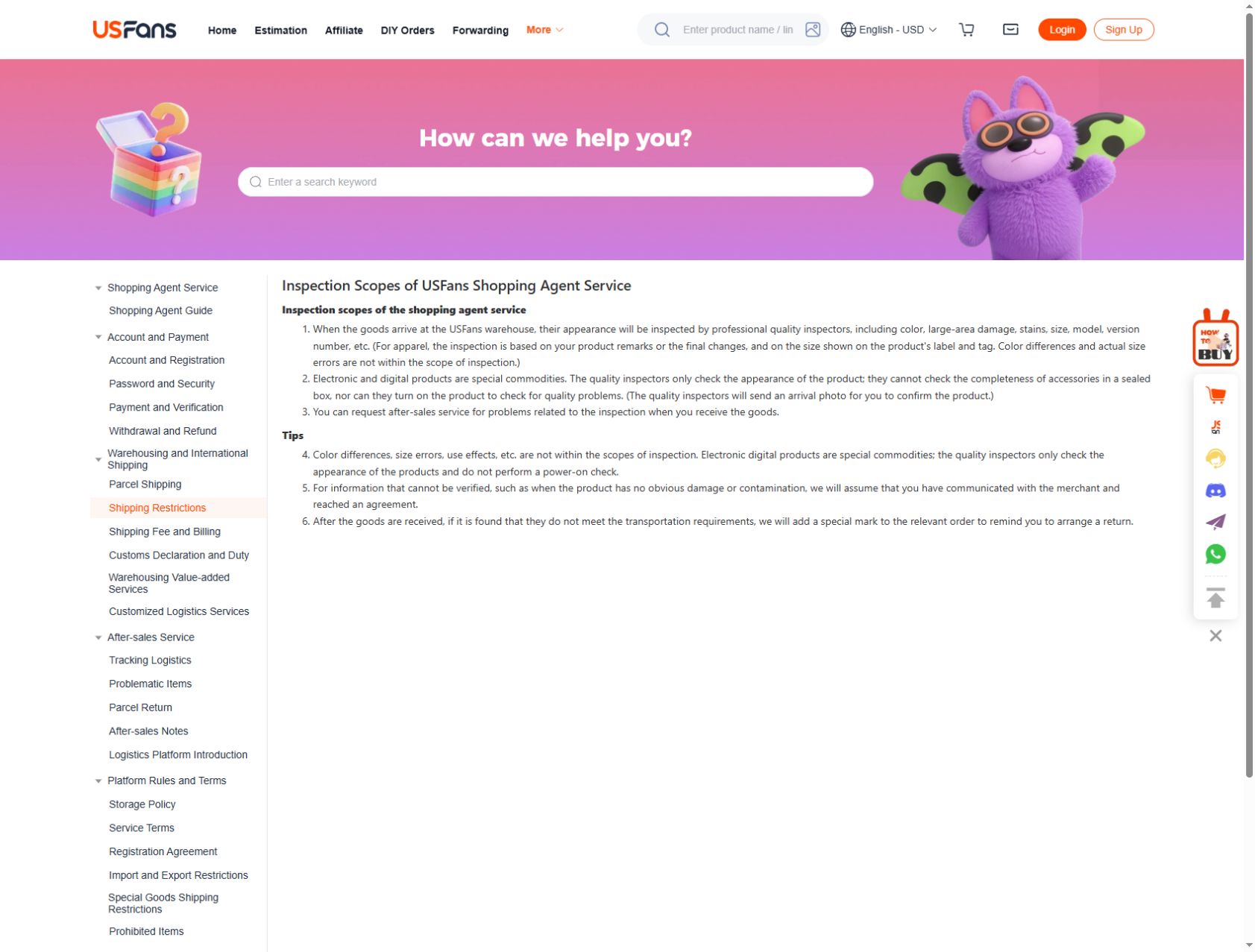
In the USFans inspection description checked on 30 September 2026, the apparel size check uses the label; actual size differences are excluded from that check. This is why a readable hoodie tag is not evidence that the sleeve length you need has been measured. Keep that separate measurement question with the item until it is answered.
Decide what to do with a mismatch
If a candidate's dimensions clearly fail your non-negotiable requirement, another product may be a better choice than repeatedly moving up and down its size range. If the definition is unclear, seek clarification before choosing. If a received item appears inconsistent with the selected option, preserve the relevant record and ask about that discrepancy promptly.
Do not assume that a mismatch automatically has one remedy. Check the conditions for the item and stage involved. Frame the question using the selected option, measurement method and observed difference.
Common sizing questions
Should I always size up when ordering through USFans?
No universal adjustment follows from the agent name. Compare the specific product chart, option and intended fit rather than transferring a rule from another item.
Can a seller's “true to size” description replace measurements?
It may describe someone's expectation, but it does not define yours. If fit matters, use dimensions with clear methods and a suitable comparison garment.
What if only one measurement is available?
Use it for the question it answers and identify what remains unknown. A suitable width does not establish suitable length. Ask about a decisive missing dimension rather than inventing it from the photograph.
Does a QC size label confirm the actual dimensions?
It identifies the label shown. A physical measurement is a separate observation, and comfort or preferred fit remains a separate judgement.
Can I reuse the same notes for another colour?
First confirm that the new option belongs to the same product and uses the same chart. Do not silently transfer a measurement from an unrelated version simply because the name is similar.
Return to the USFans spreadsheet or continue with the ordering guide.