
USFans Delivery Time: Plan Around a Date Without Guessing Arrival
If an outfit is for a trip or event, the useful USFans delivery-time question is whether the remaining steps fit your plan—not which arrival number sounds most reassuring. Decide when the item stops being useful for that purpose, then work out which stages have reliable information and which still need an answer.
There is no universal arrival date in this guide. Use the current information for the selected service and destination, then identify which earlier stages remain outside that estimate. The USFans spreadsheet guide provides the full purchase sequence.
Make two dates explicit before comparing a shipping window
Write down the day you need the item and the day you must choose a fallback. These are not necessarily the same. You may need time to organise another outfit before travelling, so waiting until the event day to discover a missed delivery would leave no useful choice.
The fallback date is your own planning decision, not a platform deadline or a prediction of failure. Keeping it separate prevents an optimistic transport estimate from consuming all the time you needed for another option.
If the item remains useful after the event, a later arrival may be acceptable. If it is only useful for that occasion, unresolved timing matters more. Decide that first rather than changing your standard after paying.
Map what still needs to happen
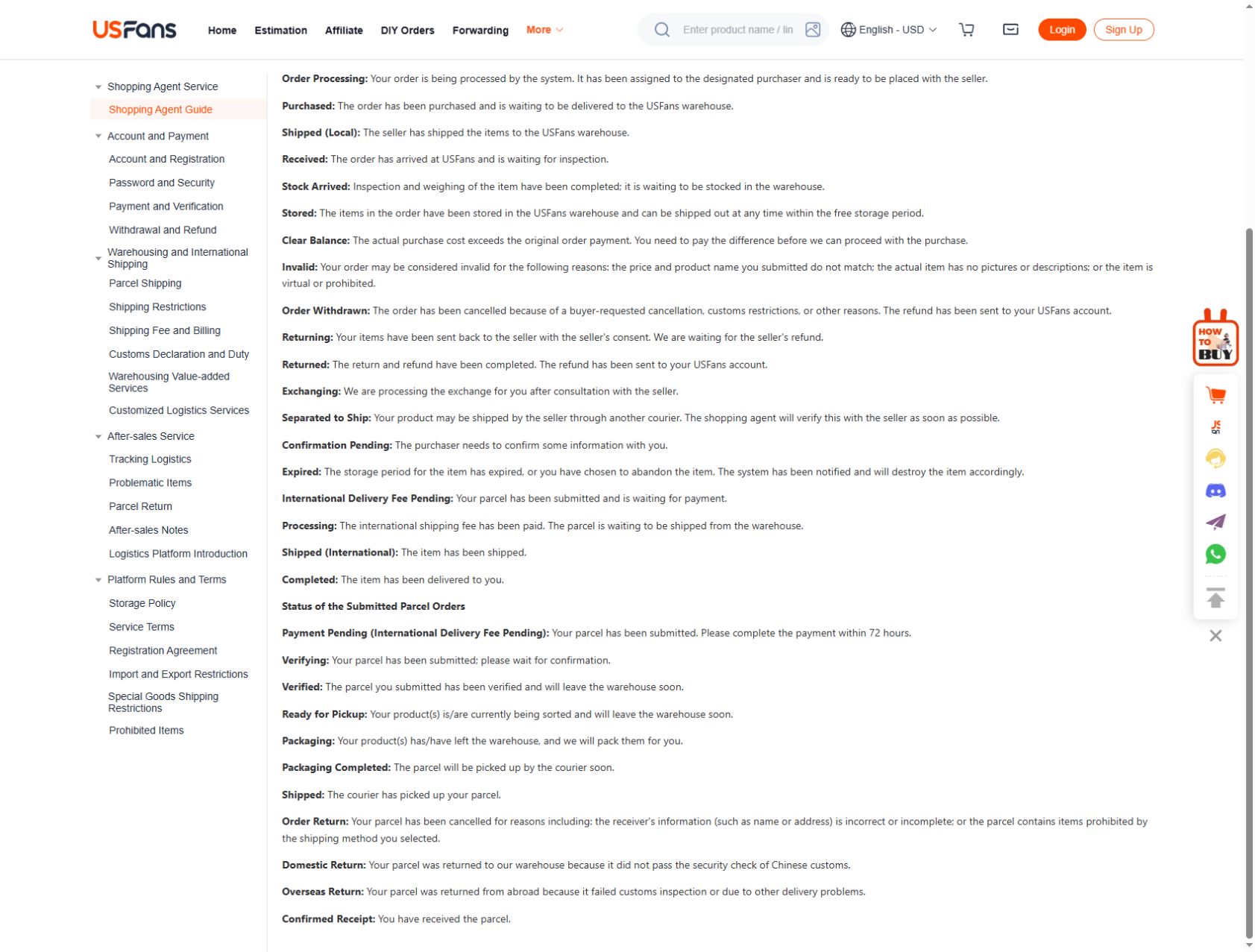
| Stage | Question that helps locate the wait |
|---|---|
| Product purchase | Has the particular item been purchased and what update is available? |
| Seller to warehouse | Has the item been dispatched and recorded as received? |
| Inspection and decisions | Are you waiting for images, clarification or another item? |
| Parcel preparation | Have the contents and shipping choices been submitted? |
| Carrier movement | What is the latest event for the actual parcel? |
| Local delivery or collection | Is an action or delivery arrangement required from the recipient? |
These are planning distinctions, not a claim that every account uses identical status labels. Read the record for the affected item or parcel and ask about an unclear transition.
Do not start the transport clock at the product link
A spreadsheet reference is a discovery step. It does not reserve stock, establish seller dispatch or start an international delivery commitment. A product payment also does not necessarily mean a parcel is already available for dispatch.
For example, inspect the garment options on USFans and compare the selected neckline and cut with your outfit plan. Opening that reference neither reserves an option nor establishes when it could reach your address. Confirm the intended option and actual purchase stage before applying any parcel-service estimate.
The warehouse guide helps distinguish received items from those still pending. When several products are involved, the last unresolved item can affect when you decide to submit a combined parcel, even if the earlier items are ready.
Ask which interval a quoted range covers
Read the service description associated with the estimate. Look for the starting event, the destination and how days are counted. If the wording does not make these clear, seek clarification rather than choosing the interpretation that gives the earliest arrival.
Do not assume that a range includes seller handling, your own waiting time for consolidation or warehouse preparation. Conversely, do not add invented delays to make a result look cautious. Mark a stage as uncertain when you do not have a supported duration for it.
Use the shipping guide when selecting a service and the shipping calculator guide for the parcel inputs. A cheaper quote and a shorter displayed time need to refer to the same contents and destination before they form a meaningful comparison.
Worked planning example: two dates, three decisions
Imagine a hypothetical trip on 20 November. The buyer wants the sweater in hand by 18 November to try it with the rest of the outfit, and decides that 12 November is the latest date to arrange an alternative. These are invented personal planning dates, not USFans processing or delivery promises.
On 8 November, the sweater is at the warehouse but a requested length measurement is unresolved. Another accessory has not arrived. The buyer now has three separate decisions:
| Decision | Information needed | What not to assume |
|---|---|---|
| Keep the sweater? | The measurement that determines whether it suits the outfit | Shipping quickly will fix a fit problem |
| Wait for the accessory? | Its actual stage and whether waiting suits the plan | A combined parcel can leave immediately |
| Rely on arrival before the trip? | Applicable service timing with its start event and unresolved preparation | A short transit estimate covers the whole remaining journey |
If those questions still cannot be resolved on 12 November, the buyer follows the fallback decision rather than moving it repeatedly to preserve a hopeful forecast. They might still keep the sweater for later use, depending on the purchase conditions and their preference. Choosing another outfit does not cancel an existing order or create a refund entitlement.
This is a planning method, not a prediction. No durations have been assigned to the unconfirmed steps, and none of these dates describes a real shipment.
Compare alternatives by what they actually change
A faster available transport service would address a transport interval; it would not answer the missing garment measurement. Sending the sweater without the accessory could remove a consolidation wait; it would not guarantee carrier acceptance on a chosen date. Buying a local fallback could solve the event-outfit problem without changing the original parcel's progress.
For each alternative, name the uncertainty it removes and the cost or inconvenience it introduces. Avoid selecting an expensive option because it sounds faster when the unresolved step lies elsewhere.
You can also decide that the purchase no longer fits the occasion. Before requesting any change, check the actual order stage and applicable conditions. A personal deadline is a reason for your decision, not proof that the service has failed a stated commitment.
Your own choices can change the timeline
Waiting for another item, requesting a closer measurement or deciding whether to return something may postpone parcel submission. Those decisions can be worthwhile, but record them separately from carrier transit. Otherwise the final total can suggest that transport took longer than the period actually spent with the carrier.
Likewise, choosing to send ready items separately changes the parcel plan. It may allow an earlier submission, but does not guarantee earlier receipt. Compare the available options and charges rather than treating a split as an automatic solution.
If a QC question could change whether you keep the product, resolve it deliberately. The QC photos guide explains how to request a view that addresses the specific concern.
Read a delay through its latest known event
When progress appears slow, begin with the last confirmed stage. If the item has not reached the warehouse, an international tracking estimate will not explain that wait. If the parcel has been submitted, identify the relevant shipment record rather than repeatedly reopening a product-order page.
The tracking guide explains how to keep event wording, timestamp and carrier context together. An unchanged tracking page does not reveal the cause of the gap by itself. Ask about the specific shipment and event instead of declaring a loss or predicting the next scan.
For a follow-up, state what was expected, what the record shows and what information you need. Preserve any previous commitment so the next question addresses it accurately.
Compare delivery stories only when their clocks match
A buyer who counts from the first product payment is reporting something different from a buyer who counts from dispatch. Destination, service and date also matter. A short social post may omit these details even when the experience it describes is genuine.
Use another person's timeline to identify useful questions, not to fill missing dates in your own order. The review guide covers how to interpret personal accounts without turning them into average performance or a guarantee.
If an older story contains a precise duration, keep it attached to that shipment. Precision does not make an old case representative of current service conditions.
Keep a short decision log as the deadline approaches
Use four fields: date checked, confirmed stage, unanswered question and next decision. Update the confirmed stage only when you have a record supporting it. A support prediction belongs under the question or planned next step until the event actually happens.
For example, “measurement received; fit suitable; accessory still pending; compare sending sweater alone” is more actionable than “probably arriving soon.” It shows exactly what changed and what you can decide next.
Do not extend the fallback date automatically whenever a new estimate appears. Reassess whether the change genuinely supplies missing information and whether you still have enough time to make an alternative work.
Questions to settle before relying on a delivery window
- Which item or parcel does the window concern?
- What event starts the count?
- What destination and service does it apply to?
- Which stages still need to happen beforehand?
- Does the wording describe an estimate or an explicit commitment?
- What would you do if the item arrived after your intended date?
These answers provide a more useful plan than an unsupported single number. Keep the current service information with your private parcel notes so you can understand a later change.
Frequently asked questions
Can I assume my parcel will match a friend's delivery time?
No. Their date, destination, service and starting event may differ. Use your own parcel's current information.
Does paying for international shipping mean the carrier has accepted it?
Check the actual parcel and carrier records. Payment and physical handoff are different events; do not infer one solely from the other.
Does the latest tracking event guarantee tomorrow's delivery?
Only rely on what the applicable service actually states. A general movement event alone does not establish a specific delivery commitment.
Should I ignore an estimate that has passed?
Review the latest record and the service's instructions, then ask about the specific parcel if clarification is needed. Do not invent an explanation or an automatic remedy.