
USFans Sets: Reconcile the Outfit from Selection to Warehouse
When you save a USFans set, keep an item list beside the outfit photograph. The useful comparison is between what you selected and what you will receive, not between two pictures that happen to show coordinated clothes. Resolve missing pieces or unclear sizing before treating the outfit as ready to send.
For a browsing candidate, view the Essentials grey clothing-set reference on USFans. Check which garments the selected option includes before applying the two-piece comparisons below. A set title or coordinated photograph does not by itself establish a T-shirt-and-shorts combination, current availability, authenticity or fit.
Translate the selection into a contents list
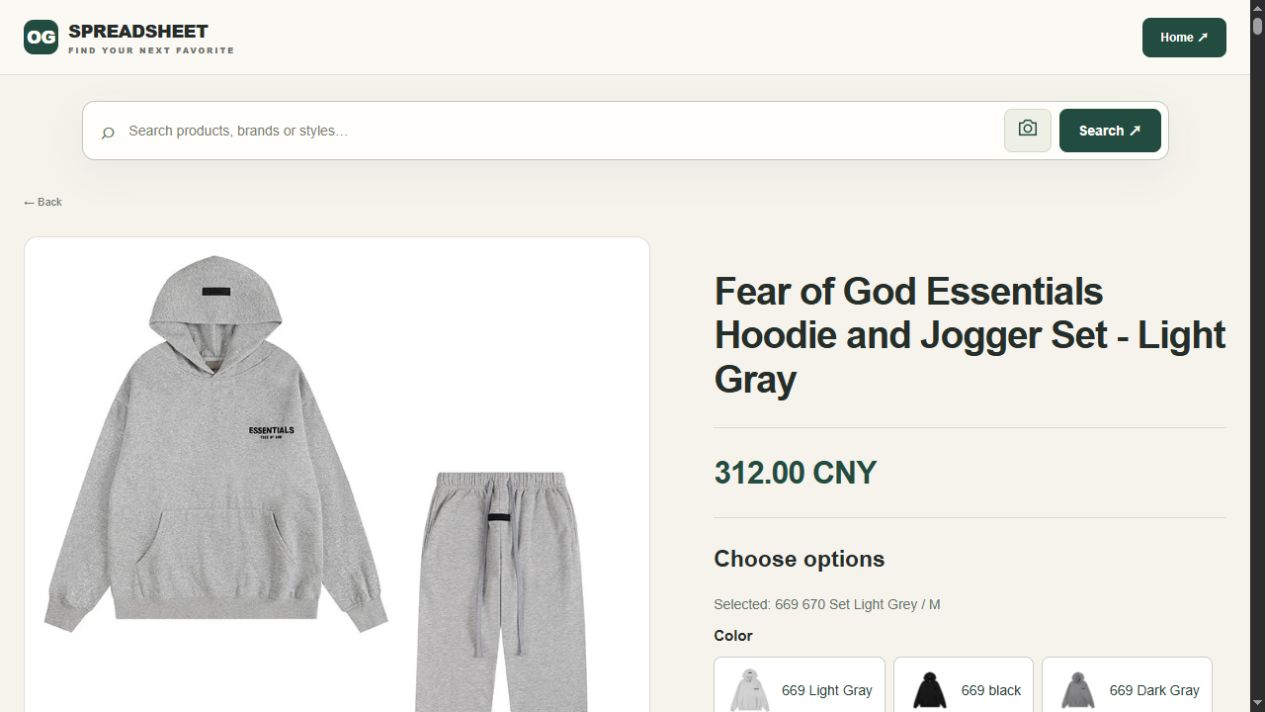
Record each included garment, its selected colour and the size information attached to it. Keep styling accessories outside the list unless the option description actually includes them. A pair of shoes next to the clothes is not evidence that shoes belong to the purchase.
If the page offers “top,” “bottom” and “set” options, retain the wording of the one you chose. A saved page title may describe a collection while your selection names only one piece. The spreadsheet links guide helps preserve the exact reference rather than only the page destination.
For a hypothetical example, you save a navy top-and-shorts image but select an option labelled top only. The problem is not solved by the image containing both pieces. Clarify or change the selection before purchasing if you want the complete outfit. Do not assume the lower amount reflects a discount on the same contents.
Check whether the sizing works for both pieces
A single size label on a set does not prove that its top and bottom suit your requirements equally. Compare the top's applicable measurements with a suitable top you own, and do the same separately for the bottom. Preserve the units and measuring method for each.
Use the T-shirt guide for a tee or the hoodies and sweaters guide for that type of upper layer, according to the actual included garment. The pants and shorts guide covers waistband and length definitions for the lower piece. If the listing permits different sizes for the pieces, establish the actual selection method. If it does not, do not invent that flexibility in your order note.
If one piece is suitable and the other remains unclear, the set is still an unresolved purchase. Ask about the missing dimension or consider another candidate. A matching colour should not conceal the unanswered sizing question.
Compare complete costs with complete contents
Before comparing a set with separate items, make both sides of the comparison describe the same intended outfit. One quoted amount for a top and another for two pieces cannot be compared as equivalent offers.
Use a simple purchase record:
| Field | What belongs in it |
|---|---|
| Selected combination | The actual option wording, not the gallery title |
| Included pieces | Each garment explicitly included |
| Sizes | The size selection and chart for each piece |
| Product amount | The amount corresponding to that combination |
| Other charges | Charges kept separate with their stated purpose |
| Unresolved issue | The question preventing the next action |
Keep shipping separate until a suitable parcel proposal is available. A product offer for two garments does not establish what the packed shipment will cost. Use the shipping guide when that later decision is ready.
Reconcile what reaches the warehouse
Match the warehouse record with your contents list. If only one piece is visible, establish whether the other is absent, recorded separately or simply outside the photograph. A cropped view is not proof of a missing garment, but it is not proof that the complete set arrived either.
For each piece, check the selected option and any relevant visible detail. If you need to compare the colours together, ask whether a contextual view of both is available. Separate photographs under different conditions can be difficult to compare, so avoid declaring an exact colour mismatch from unrelated views.
The QC photo guide explains how to ask a targeted question. Images can help with visible correspondence; they cannot establish fibre composition, lasting colour match or behaviour after washing.
Handle a one-piece problem without assuming a one-piece remedy
For a hypothetical top-and-shorts purchase, if the top appears incorrect but the shorts seem right, describe the issue precisely and ask what remedy applies to that purchased combination. This example does not establish the contents of the linked candidate. Do not assume a partial return is available or that keeping one piece leaves the original terms unchanged.
Retain the original item and option records while asking. Before authorising packaging or tag changes, check their relevance to the remedy being considered. The returns guide separates the request, accepted outcome and refund destination.
If pieces have separate order states, keep those states visible in your own record. The order-status guide explains why one completed item does not establish that everything in the basket is ready.
Keep the outfit decision distinct from the parcel decision
Only after the contents and item questions are settled should you treat the set as a candidate for the parcel. Compare the actual packed inputs rather than estimating from the number of pieces in the title. Keep any proposed packaging change attached to the actual items it affects.
Your final shortlist note can say which combination you selected and which question was resolved. That is more useful than simply marking an outfit “good.” The best spreadsheet guide shows how to keep those decisions organised alongside individual garments.
Frequently asked questions
Does “set” guarantee everything in the photograph is included?
No. Establish the contents of the selected option, including whether the offer is for one garment or a combination.
Can I select different top and bottom sizes?
Only if the actual purchase options allow it. Do not assume that an order note changes the available combination.
Does one warehouse image establish that both pieces arrived?
Check what is visible and how the items are recorded. Ask about the missing information instead of inferring completeness from the title.
Can I return only the unsuitable piece?
Confirm the remedy for that purchase. A set's partial-return conditions cannot be inferred from an unrelated single-item return.