
USFans Haul: Reconcile the Parcel with the Purchases Behind It
A USFans haul is easier to understand when the parcel can be connected to its actual items, costs and timeline. A photograph of a full box does not tell you which purchases it contains or which questions remain unresolved. Start with the item list, then examine the claims made about the parcel.
Use an item-by-item record to connect the purchases with the parcel that actually left the warehouse. The hypothetical shirt, cap and trousers plan below shows how to keep unfinished items visible rather than letting one delivered box stand for the entire basket.
A dated haul example: visible items and reported experience
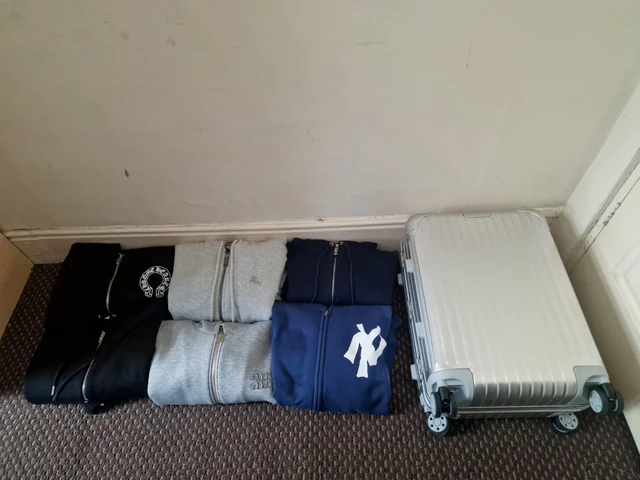
A 5 June 2026 Reddit haul photo shows six folded tops and a silver-coloured suitcase. The author reports receipt in the UK and explicitly leaves the case’s travel performance for later. When shortlisting clothing, retain that stage distinction: a parcel photo is not a fit comparison or a long-term review. The OG candidate in this article is not identified as an item from that post.
Reconcile the basket and the parcel
Imagine a purchase plan containing a shirt, a cap and trousers. The shirt and cap are ready at the warehouse while the trousers are still unresolved. A parcel containing the first two does not establish the outcome of the trousers, even if a later post describes the whole plan as one haul.
Keep the status of every item separate. Record whether it was included, left at the warehouse, cancelled or still under discussion using the information actually available. The order-status guide explains why one parcel event does not update every item in a basket.
For your own plan, use the warehouse guide to identify the items ready for the next decision. Do not add an unresolved item simply to make the parcel feel complete.
Read the item observations individually
If a haul post lists six products but comments on only two, those two observations do not evaluate the remaining four. Check whether each pictured item corresponds to the selected option discussed. A group photograph may be useful context, but it is not a detailed condition record for every piece.
Separate arrival observations from later wear. “Looks as expected out of the box” and “still fits after washing” refer to different stages and require different information. The review guide helps preserve that distinction without turning enthusiasm into a tested result.
The QC photo guide addresses warehouse inspection. A warehouse image is not evidence that the item reached the customer's destination, just as a delivery scan alone does not show every product's condition.
Separate the costs before comparing two hauls
Keep the product amounts and parcel charges distinct. Establish which items a total includes and whether it describes a paid amount or an estimate. A large basket and a smaller shipped parcel can otherwise appear to share one misleading total.
| Figure in a haul account | Context to establish |
|---|---|
| Product total | Which selected items and quantities it covers |
| Shipping amount | Destination, service and actual parcel concerned |
| Weight | Whether it is actual packed weight or another charging input |
| Discount | Which charge it affected and whether it was applied |
| Refund | Which item or transaction it relates to and its recorded state |
Do not assume two equal parcel weights describe equivalent quotations. Contents, dimensions, destination and service can differ. The shipping calculator guide explains how those inputs affect a comparison; the shipping guide covers the wider parcel decision.
A haul's historical amount does not establish today's quote for a new order. Keep the date and scope rather than presenting another person's bill as your expected charge.
Give every duration a beginning and an end
“Ten days” is not useful until the events being counted are identified. A writer may mean time after dispatch while another means time since ordering the first item. Retain the actual event dates if available and do not combine those different periods into an average.
The delivery-time guide separates purchase readiness from transport. The tracking guide explains why a platform status and a carrier event can describe different stages. A gap in a shared account should remain a gap, not a guessed date chosen to make the story complete.
For an unfinished haul, describe the completed stage rather than inventing the ending. A parcel submitted is not yet an arrival review.
Use an interesting find as a new purchase question
If a haul introduces a product you like, recover its actual destination and option through the spreadsheet links guide. A visually similar listing is not automatically the same product, and a saved old link may no longer identify the option shown.
For a separate browsing candidate, view the TNF T-shirt on USFans. It is not the shirt in the hypothetical parcel above and does not inherit that example's shipping or purchase history. Compare the actual option and design using the T-shirt guide.
That separation lets a haul inspire a shortlist without turning it into unsupported evidence for a different product.
Preserve privacy when sharing your own account
Keep names, full addresses, order identifiers and readable shipping barcodes out of public photographs. Retain complete records privately for any actual service enquiry. Obtain permission before republishing another person's pictures and preserve the context that determines what they show.
Do not count reposted photographs as independent parcels. The community guide explains how to follow a claim back to its source and later updates. If a problem remains unresolved, say what stage it has reached rather than implying a successful remedy.
Frequently asked questions
Is a warehouse collection already a delivered haul?
No. Identify the completed stage and the items actually included in any subsequent parcel.
Can I compare two haul totals directly?
Only after establishing the included items, charges, destination and parcel context. A shared number or weight does not make two purchases equivalent.
Does one good item review support every item in the box?
No. Keep observations attached to the item and stage they actually describe.
Are the example and product link a real haul from this site?
No. The planning example is hypothetical and the product link is a separate browsing candidate.